Home › Before & After › Cover-Up Lightening
Cover-Up Lightening · Real Client ResultsTattoo Lightening for Cover-Ups, Before and After
You do not always need a tattoo gone, sometimes you just need it lightened enough for a fresh design to go over it cleanly. Cover-up lightening is one of the most popular things we do, and it usually takes fewer sessions than full removal. Every before-and-after below is a real Ink Off client, de-identified and not retouched.
In short
Lightening a tattoo for a cover-up needs fewer PicoSure sessions than full removal, often around 3–6, because the old ink only has to fade enough for a new tattoo to work over it, not disappear. The aim is even, softened fading across the whole design so your new artist has a clean, low-contrast base to work on.
Real client result
Real client results. Identifying details removed to protect privacy. Individual results vary; some inks fade rather than fully clear.
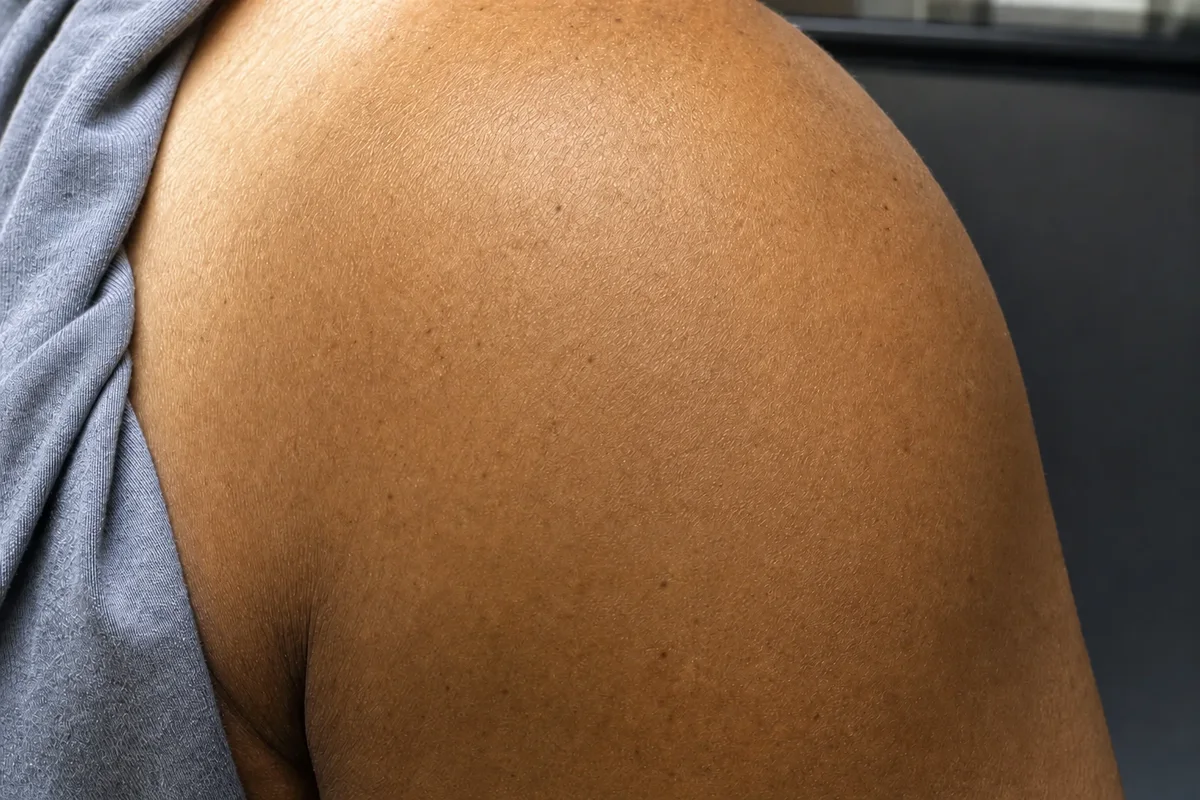
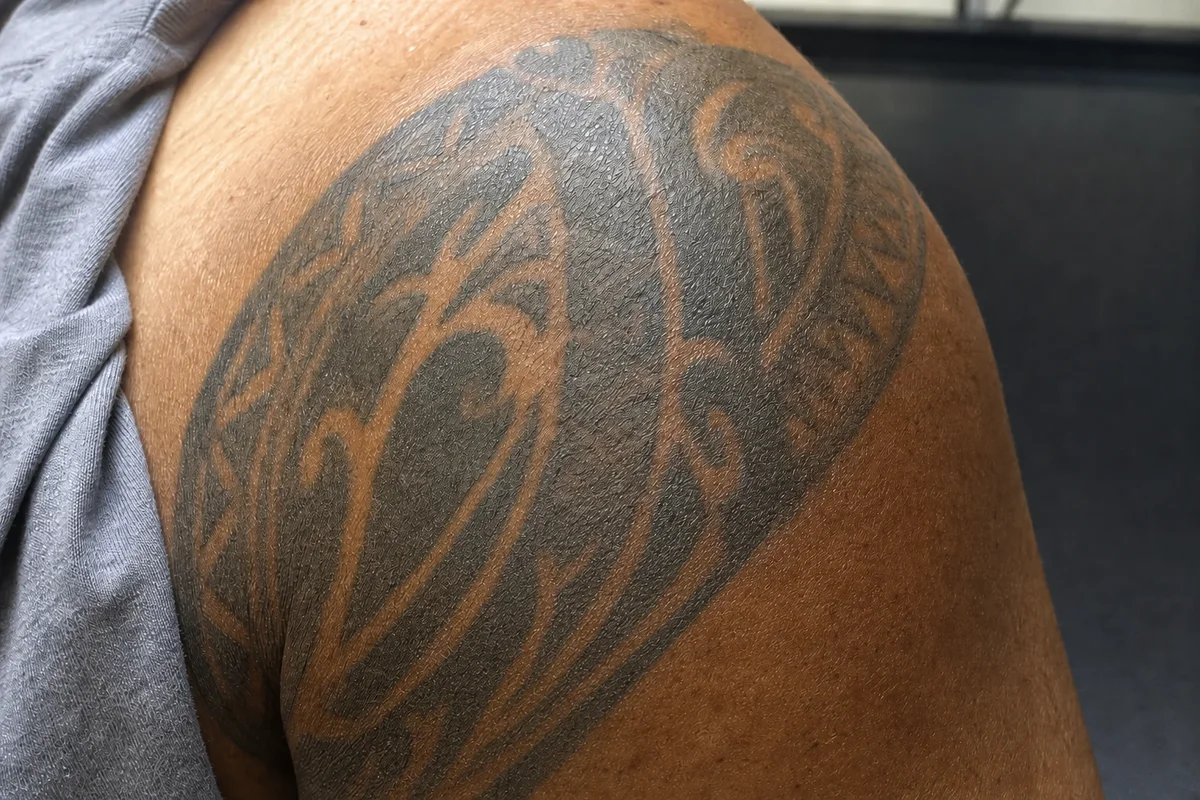
Dense black cover-up piece, shoulder (drag to compare)
A dense solid-black cover-up piece over the shoulder. Layered cover-up work holds more pigment than a single tattoo, so it is one of the harder jobs — this client's removal is complete. Individual results vary.
Real client results. Identifying details removed to protect privacy. Individual results vary; some inks fade rather than fully clear.
Full removal and cover-up lightening are different goals with different finish lines. For full removal we chase the ink until barely a ghost remains. For a cover-up we only need to reduce the old tattoo enough that a new design can sit over it without the old work showing through, so we stop far sooner. That is why lightening is usually the shorter, more affordable path.
The key is even fading. Rather than clearing one area completely while another stays dark, we aim to wash the whole piece back to a low, uniform contrast, which gives your tattoo artist the most freedom to design over it. For a cover-up you can stop well before the skin is clear, so the plan is usually shorter than the removals shown here.
The number of sessions depends on how dark and dense the original is and what you plan to cover it with, darker new designs need less lightening. Bring your cover-up idea to your free video assessment and a specialist will plan the minimum lightening you need, backed by our 100% money-back guarantee.
Cover-Up Lightening: common questions
Is lightening for a cover-up faster than full removal?
Usually, yes. Lightening needs fewer sessions, often around 3–6, because the old ink only has to fade enough for a new design to go over it, not disappear completely.
How faded does my tattoo need to be for a cover-up?
It depends on your new design, darker or more detailed cover-ups hide more, so they need less lightening. We plan the minimum fading you need with your artist’s design in mind.
Can you lighten just part of a tattoo?
Yes. We can target the areas your cover-up needs reduced and leave the rest, or evenly lighten the whole piece, whatever gives your artist the best base to work on.
Keep exploring
See What’s Realistic for Your Tattoo
Book a free video assessment and a specialist will assess your actual tattoo live, give you an honest candidacy verdict and your real quote, before you spend a cent.
Book My Free Video Assessment100% Money-Back Guarantee (conditions) • PicoSure Laser • Pay per session from $80 • Kensington, Melbourne