PicoSure Picosecond Laser: On Premises, Not Outsourced
The laser you're treated with matters as much as the person holding it. Ink Off runs a Cynosure PicoSure picosecond laser in our Kensington studio. Here's what that actually means for your tattoo, in plain English.
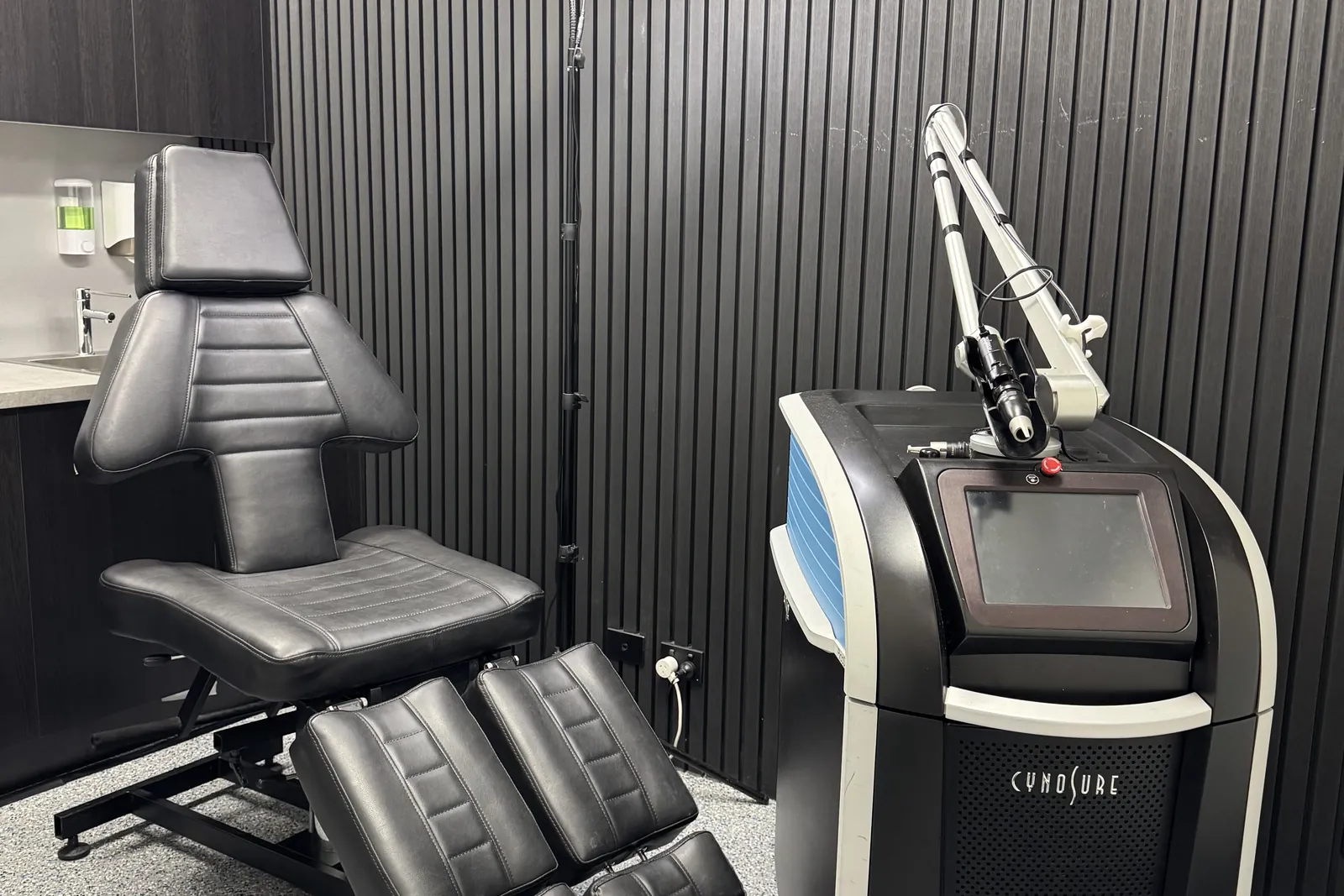
What "picosecond" means, and why pulse speed matters
Every tattoo removal laser does the same basic job: it fires energy at the ink sitting in your dermis, breaking the pigment into fragments small enough for your immune system to carry away. The difference between laser generations is how they break the ink.
A picosecond is one trillionth of a second. PicoSure delivers its energy in pulses roughly a thousand times shorter than the nanosecond pulses of older Q-switched lasers. That ultra-short pulse changes the physics of what happens to the ink:
- Q-switched (nanosecond) lasers work largely photothermally. The pulse is long enough that a meaningful part of its effect comes from heating the ink, and some of that heat spreads into surrounding tissue.
- Picosecond lasers work primarily photomechanically. The pulse is so short that it creates a pressure wave that shatters ink particles, with less reliance on heat.
Smaller fragments are easier for your lymphatic system to clear between sessions. In practice, picosecond lasers often need fewer sessions than older Q-switched lasers, though every tattoo responds differently, and no honest operator will promise you a number before assessing your ink. Our PicoSure vs Q-switched deep dive covers the comparison in full.
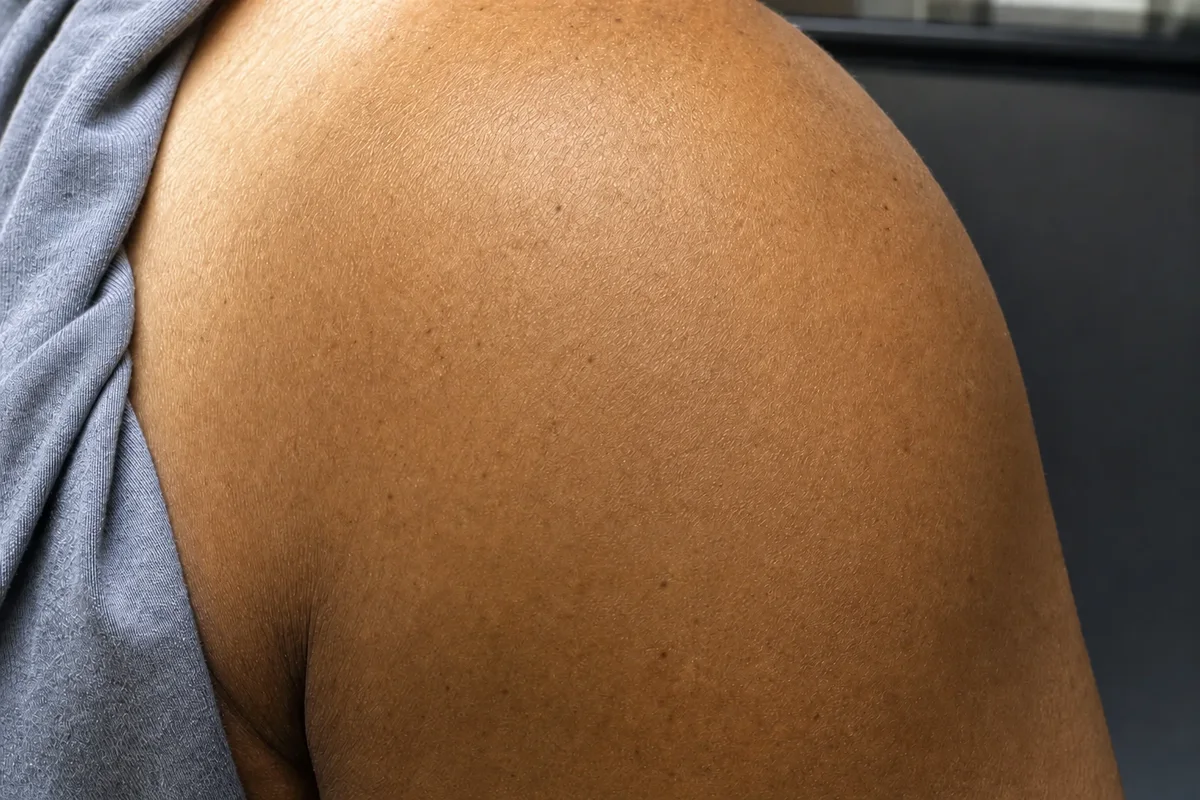
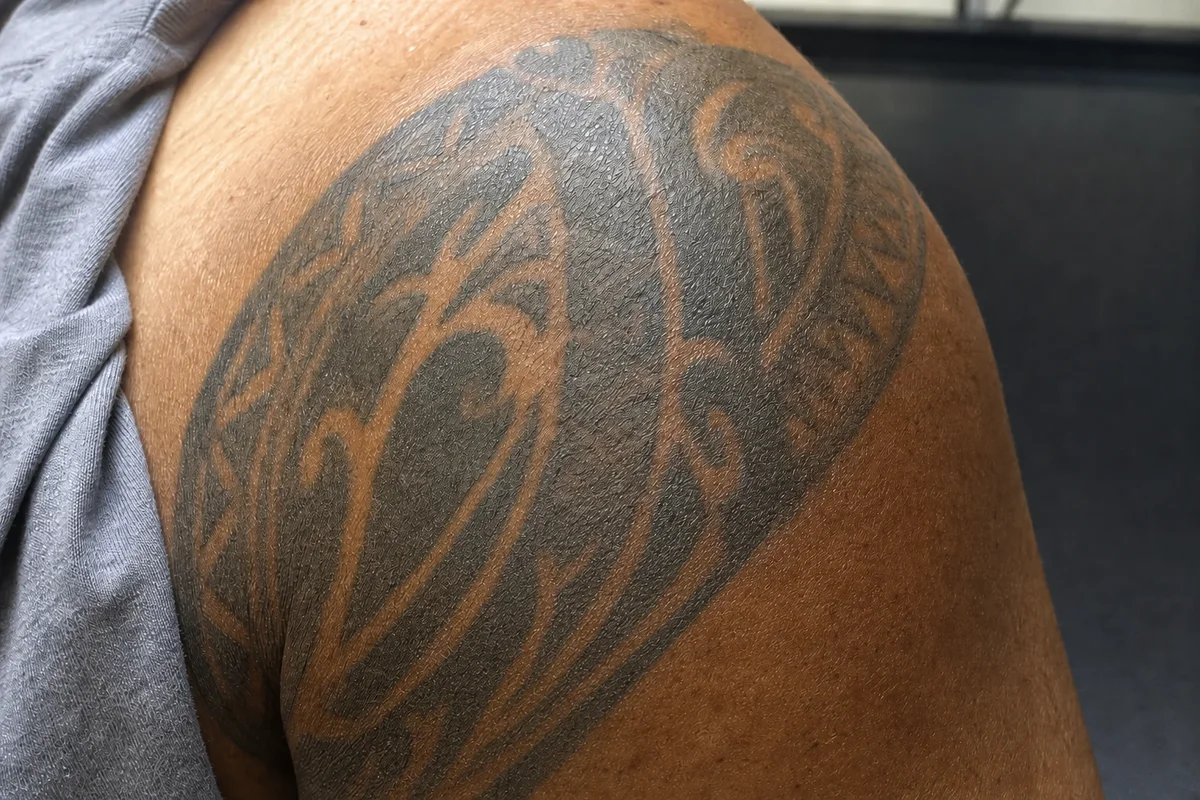
PicoSure vs older Q-switched lasers at a glance
PicoSure (picosecond)
- Ultra-short picosecond pulses
- Primarily pressure-wave (photomechanical) ink shattering
- 755nm alexandrite wavelength, strong on black, blue and green inks, with more wavelength delivery options
- Often fewer sessions than older Q-switch lasers
Q-switched (nanosecond)
- Nanosecond pulses, ~1,000× longer
- Larger photothermal (heat) component
- Proven workhorse technology, still widely used
- Typically lower per-session prices at clinics that run them
Honest note: Q-switched lasers still remove tattoos. Millions have been removed with them. Picosecond is a newer generation with real physical advantages, not magic. What matters is matching the laser and settings to your ink and skin, which is exactly what a free video assessment is for.
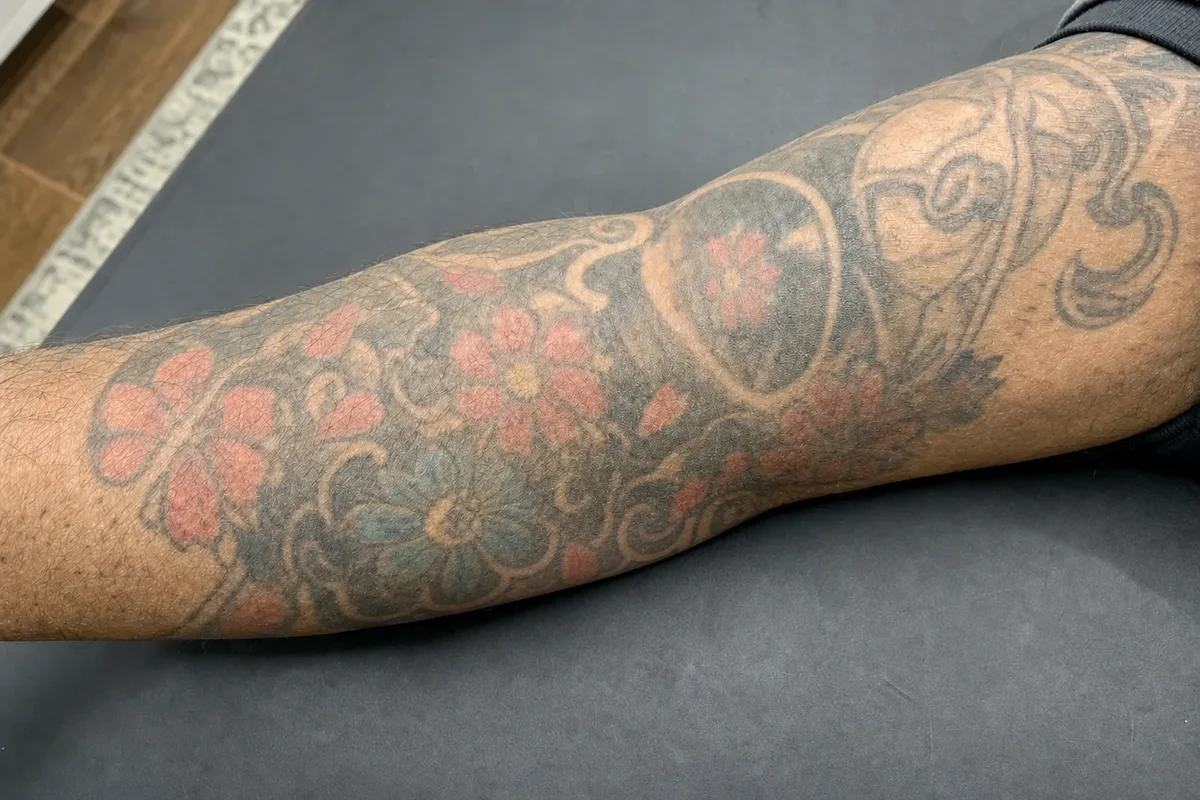
What PicoSure means for colour tattoos
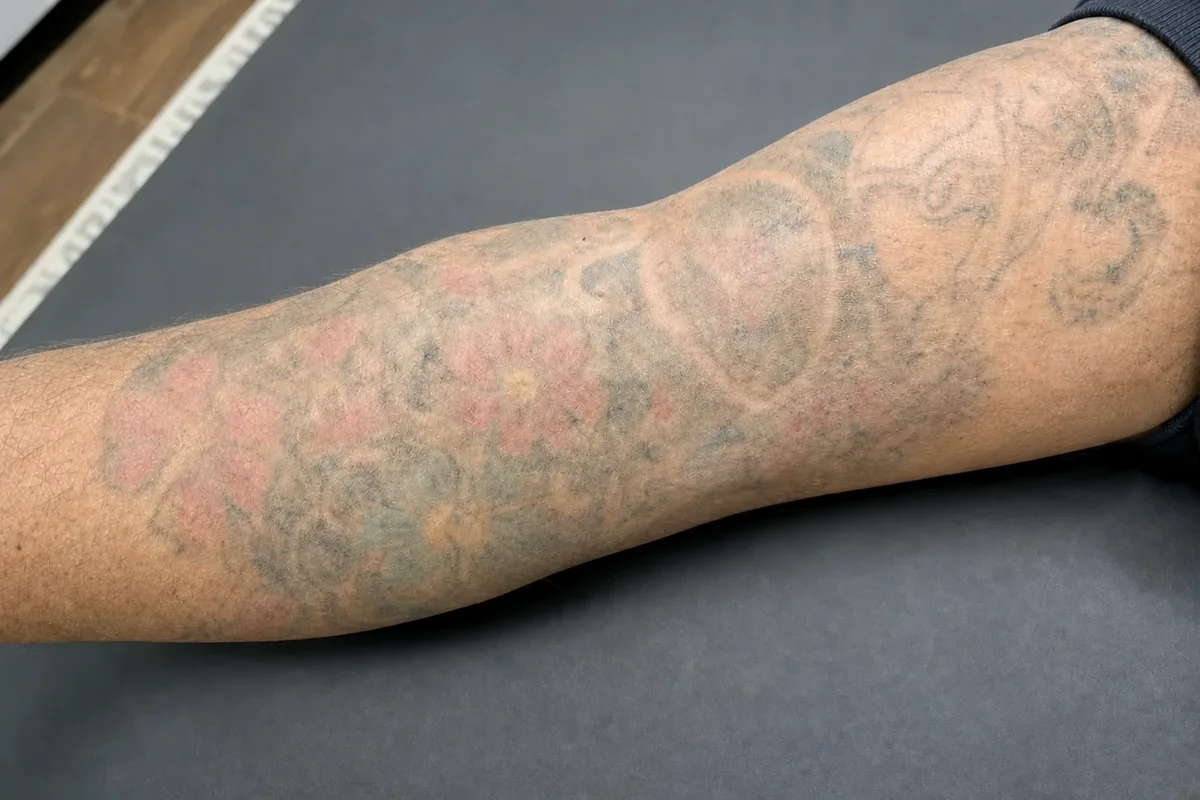
Black ink absorbs energy across a broad range of wavelengths, which is why it responds best for every laser. Colours are pickier: each pigment absorbs some wavelengths and reflects others. PicoSure's primary 755nm alexandrite wavelength is well matched to black, blue and green pigments, green being a colour older lasers often struggle with, and more wavelength delivery options extend coverage to other colours.
Some pigments remain genuinely stubborn for every laser on the market, yellows, whites and certain pastels among them. If your tattoo has these, we'll tell you up front rather than let you discover it six sessions in. Read the colour tattoo removal guide for the colour-by-colour picture.
Regulation and safety
PicoSure devices are included on the Australian Register of Therapeutic Goods (ARTG) and are FDA-cleared in the United States (510(k) clearances on the public FDA register). That tells you the device itself meets regulatory requirements. The rest comes down to how it's operated.
At Ink Off, every treatment starts with a skin and ink assessment, settings are matched conservatively to your skin type, and eye protection is worn for every pulse. Laser tattoo removal has normal, expected after-effects, temporary redness, swelling, sometimes blistering, and our aftercare guide covers exactly how to manage them. For the full risk picture, including what to check before choosing any operator in Australia, see our safety and regulations guide.
What a session feels like
Treatment itself is quick, typically 5 to 15 minutes depending on the size of your tattoo. Most clients describe the sensation as sharp snaps, like a rubber band flicking the skin. It's uncomfortable rather than unbearable, it's over fast, and we use cooling to take the edge off. Sessions are typically spaced 6–8 weeks apart so your body can clear the shattered ink between visits.
Curious about the pain question specifically? We wrote an honest answer: Does tattoo removal hurt?
Technology FAQs
Ink Off runs a Cynosure PicoSure picosecond laser on premises at our Kensington, Melbourne studio. PicoSure devices are included on the Australian Register of Therapeutic Goods (ARTG) and FDA-cleared.
Q-switched lasers deliver energy in nanosecond pulses and break ink down largely through heat (a photothermal effect). Picosecond lasers like PicoSure deliver pulses roughly a thousand times shorter, shattering ink primarily through a pressure-wave (photomechanical) effect. In practice, picosecond lasers often need fewer sessions than older Q-switched lasers, though every tattoo responds differently.
PicoSure devices are included on the Australian Register of Therapeutic Goods (ARTG) and FDA-cleared. Like all laser treatments, tattoo removal carries risks such as temporary redness, swelling and blistering, which is why treatment settings are matched to your skin and tattoo at a free video assessment before you commit to anything.
PicoSure's 755nm alexandrite wavelength is particularly effective on black, blue and green pigments, and more wavelength delivery options target other colours. Some colours, notably yellows and certain pastels, remain stubborn for every laser on the market. A free video assessment gives you an honest read on your specific ink.
Treatment itself typically takes 5 to 15 minutes depending on the size of the tattoo. Sessions are typically spaced 6 to 8 weeks apart so your body can clear the shattered ink between visits.
See What PicoSure Can Do for Your Tattoo
Quick online check for a starting session range, or come meet the laser in person, free, no obligation.
100% Money-Back Guarantee (conditions) • PicoSure Laser • From $80/session, no lock-in