Laser Tattoo Removal Safety in Australia: Risks, Regulation & Red Flags
You are letting someone point a laser at your skin, so you deserve straight answers. Here is what normal healing looks like, what can genuinely go wrong, how Australian regulation actually works, and the warning signs that should send you somewhere else.
Key Takeaways
- Laser tattoo removal has a strong safety record, but it is not risk-free. Redness, swelling and blistering are normal parts of healing.
- Scarring is uncommon and mostly preventable: nearly all cases trace back to wrong settings, rushed schedules or ignored aftercare.
- Australia has no single national rule for who can operate a tattoo removal laser. Requirements vary between states and territories.
- The operator matters more than the machine. Ask who will treat you, what training they hold and how they assess your skin type.
- A proper consultation before any treatment is non-negotiable. A clinic that wants to fire the laser on day one is a red flag.
How Safe Is Laser Tattoo Removal, Really?
Honest answer: very safe in trained hands, and never completely without risk. The procedure is a controlled injury. Ultra-short pulses of light pass through the upper skin and shatter the ink sitting in the dermis into fragments small enough for your immune system to carry away. Your skin reacts to that the way it reacts to any insult, with redness, swelling and sometimes blisters.
That reaction is expected. What separates a routine recovery from a genuine complication is almost always one of three things: the settings chosen for your skin, the spacing of your sessions, and how well the aftercare is followed. All three are controllable, which is why most problems in this field are preventable rather than random.
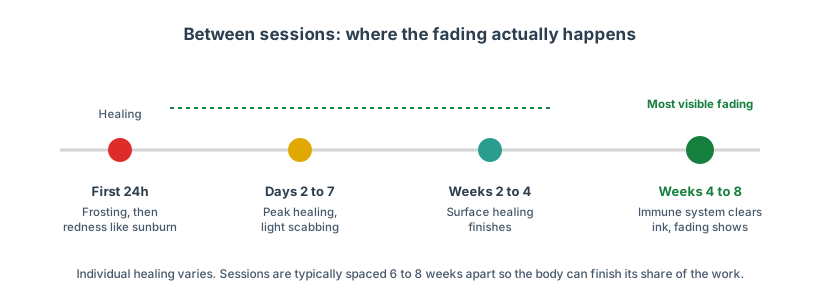
For context on the process itself: sessions typically run 5–15 minutes, they are typically spaced 6–8 weeks apart, and most tattoos need somewhere between 5 and 17 sessions. Every tattoo responds differently. You can read the full process breakdown in our guide to how laser tattoo removal works.
Normal Side Effects: What Healthy Healing Looks Like
These reactions show up for most people and settle on their own. None of them means something has gone wrong.
Redness and swelling
The treated area usually looks and feels like mild sunburn straight after a session. This settles over one to three days and is simply evidence the laser energy reached the ink layer.
Tenderness
Expect the area to be sensitive to touch for a few days. A cool compress usually covers it; your practitioner can suggest options if it bothers you more than that.
Blistering
Blisters can appear within hours, especially over dense, heavily saturated ink. They look dramatic and they are still within the range of normal. They generally heal within a week or two, provided you leave them alone. Popping or picking blisters is the single most common way people turn a routine recovery into a problem.
Pinpoint bleeding and texture changes
Tiny dots of surface bleeding can appear immediately after treatment and stop within minutes. The skin may also feel rough, raised or scaly while it repairs between sessions; this smooths out as healing completes.
Less Common Effects Worth Knowing About
Pigment changes
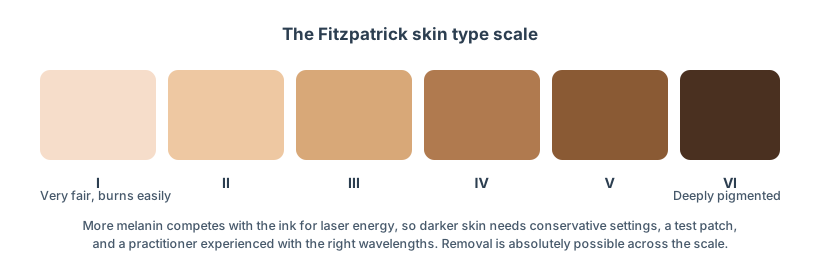
The laser targets pigment, and your skin's own melanin is pigment too. Some people notice the treated patch turning lighter than the surrounding skin (hypopigmentation) or darker (hyperpigmentation). Both are more likely on olive and darker skin tones, and both usually improve over the months after treatment finishes, though in a small number of cases the change can persist. Careful setting selection for your Fitzpatrick skin type, and strict sun protection between sessions, are the two best defences. If you have a deeper skin tone, our guide to tattoo removal on darker skin covers this in detail.
Ink darkening on cosmetic tattoos
White, flesh-toned and some cosmetic inks contain titanium dioxide or iron oxide, which can oxidise and turn darker the instant laser energy hits them. This is well documented, and it is exactly why a patch test on cosmetic ink is standard practice before any full treatment.
Ghosting
Occasionally a faint outline of the old tattoo remains visible even after the ink itself has cleared. This comes from texture changes left behind by the original tattooing, not from the laser.
The Risks That Matter: Scarring, Infection, Allergic Reaction
Scarring
This is the one people worry about most, and the good news is that it is uncommon, and largely preventable. When scarring does occur, the usual culprits are: energy set too high for the skin type, trying to clear too much ink in one session, inadequate cooling during treatment, sessions squeezed too close together, or aftercare being ignored (picking blisters, sun exposure, infection). A history of keloid scarring raises your baseline risk, so disclose it at consultation.
Infection
Rare when the aftercare routine is followed. Warning signs are redness spreading beyond the treated area, discharge, fever or pain that worsens after the first 48 hours. Any clinic worth your money gives you written aftercare instructions and a way to reach them between sessions. Our own protocol is published on our aftercare page.
Allergic reactions
Breaking ink into fragments releases it into the body, and in rare cases that can trigger an allergic response, most often with red and yellow inks. Itching, rash or unusual swelling around the treated area is worth reporting. If you reacted to the ink when the tattoo went on, say so before treatment starts.
Your medical history matters too. Immunosuppressive conditions or medications, active skin conditions in the treatment area, pregnancy or breastfeeding, blood thinners, and recent isotretinoin (Roaccutane) use can all change whether and how you should be treated. Be upfront. A good practitioner adjusts the plan rather than guessing.
Who Regulates Laser Tattoo Removal in Australia?
Here is the part most people find surprising: Australia has no single national licensing framework covering who can perform laser tattoo removal. The rules differ between states and territories. NSW and Queensland, for instance, set specific requirements around operating high-powered lasers, while other jurisdictions rely on more general health-service regulation. Victoria has registration requirements for operators of non-medical cosmetic procedures, including laser treatments. But the practical reality across the country is a patchwork.
What does that mean for you? The onus sits largely with the consumer. A clinic meeting the minimum legal bar in one state might not meet it in another, so the useful questions are direct ones:
- Who exactly will perform my treatment? Not the clinic's credentials, the individual's.
- What laser safety training have they completed? A confident operator answers this without flinching.
- Are they a registered health practitioner? If a clinic tells you its operators are AHPRA-registered practitioners, you can verify that yourself in minutes at ahpra.gov.au.
- Is the device itself legitimate? Lasers used clinically in Australia should be included on the Australian Register of Therapeutic Goods (ARTG). The PicoSure system we run at Ink Off is ARTG-included and FDA-cleared. More on the device itself on our technology page.
Quick check: two questions expose most low-standard operators: "who will treat me and what training do they have?" and "how do you assess my skin type before choosing settings?" Vague answers to either are your cue to leave.
Red Flags: When to Walk Away
Standards vary a lot in this industry. Be wary of any clinic where you encounter:
- No consultation before treatment. A real consult assesses your skin type, the tattoo's age, colours, density and location, previous removal attempts, and your medical history. Skipping it isn't efficiency. It's corner-cutting.
- Pressure to start the same day. Legitimate operators are happy for you to go home and think.
- Promises of a fixed session count or a flawless outcome. Nobody can honestly promise "gone in three sessions". Honest clinics quote ranges, because every tattoo responds differently.
- No skin type assessment or patch test offer, particularly for cosmetic tattoos or deeper skin tones.
- No written aftercare and no between-session contact point.
- Pricing that seems impossibly cheap. Proper equipment, training and clinical protocols cost real money. A price that ignores that is usually cutting something you can't see.
How We Approach Safety at Ink Off
We treat the consultation as the safety step, not a sales step. Every treatment plan starts with a free 20-minute video assessment, no obligation, where your practitioner assesses your skin type, your tattoo and your history before any laser settings are chosen, and you leave with a written plan. Cosmetic and unusual inks get a patch test first. You also get written aftercare and a direct way to contact our team between sessions.
If you want a starting point before you come in, our free 2-minute candidacy check gives you a provisional session-range estimate based on the same clinical factors we check in person. And because we know trust is the whole game in this industry, our work is backed by a 100% money-back guarantee. Conditions apply.
Frequently Asked Questions
Laser tattoo removal has a strong safety record when it is performed by a trained operator using appropriate settings, but it is not risk-free. Redness, swelling and some blistering are a normal part of healing. Serious complications like scarring and infection are uncommon and usually preventable with correct settings, a proper consultation and disciplined aftercare.
Scarring is uncommon and, in most cases, preventable. When it happens, it usually traces back to laser settings that were too aggressive for the skin type, sessions crammed too close together, or aftercare being ignored, especially picking at blisters or scabs. Tell your practitioner if you have a history of keloid scarring so they can adjust the plan.
It depends on the state or territory, because Australia has no single national licensing rule for tattoo removal lasers. Some states, such as NSW and Queensland, set specific requirements for operating high-powered lasers, while others rely on broader health-service regulation. Wherever you are, ask who will actually treat you, what training they hold and how they assess your skin before treatment.
Keep the treated area clean and dry, never pick at blisters or peeling skin, keep the area out of the sun (then use SPF 50+ once healed), skip pools, saunas and hard exercise until the skin has settled, and contact your clinic promptly if you notice spreading redness, discharge, fever or worsening pain. Most preventable complications come down to aftercare.
The laser shatters ink into fragments, and your immune system then needs weeks to flush those fragments away. Sessions are typically spaced 6 to 8 weeks apart to allow full healing and maximum clearance between treatments. Compressing that schedule does not speed up results; it just loads more stress onto skin that has not finished recovering.
Sources & About This Guide
- Australian Health Practitioner Regulation Agency (AHPRA), practitioner registration register, ahpra.gov.au
- Therapeutic Goods Administration, Australian Register of Therapeutic Goods (ARTG) medical device listings
- Australasian College of Dermatologists, laser treatment safety guidance
- Further reading: Tattoo removal safety and regulations in Australia, a neutral explainer on Tattoo Removal Guide (directory operated by Ink Off's founder).
This guide is general information, not medical advice. Ask your practitioner (or your GP) about your specific situation.
Related Guides
Get Straight Answers About Your Skin and Your Tattoo
Start with our free Check My Tattoo tool for a provisional session-range estimate, or book a free 20-minute video assessment, no obligation, no pressure.
100% Money-Back Guarantee (conditions) • PicoSure Laser • From $80 a Session