Does Tattoo Removal Hurt? An Honest Answer
Yes, a bit, briefly. If pain is the thing that's kept you from booking, here's exactly what a laser session feels like, what makes it better or worse, and every option you have to take the edge off.
Key Takeaways
- Laser removal stings more per second than getting tattooed, but a session at Ink Off typically runs 5–15 minutes, not hours.
- Where the tattoo sits on your body changes the experience more than your pain threshold does. Ribs and ankles bite; upper arms and thighs are easy.
- Numbing cream, skin cooling and simple preparation each make a genuine difference, and they stack.
- Sessions usually get easier as you go: less ink in the skin means fewer pulses and less sting.
- Afterwards, expect a sunburn-like feeling for 1–3 days, manageable with cool compresses and basic aftercare.
The Honest Answer
Most clinics dance around this question. We won't: laser tattoo removal is uncomfortable. Anyone who tells you it's painless is selling something.
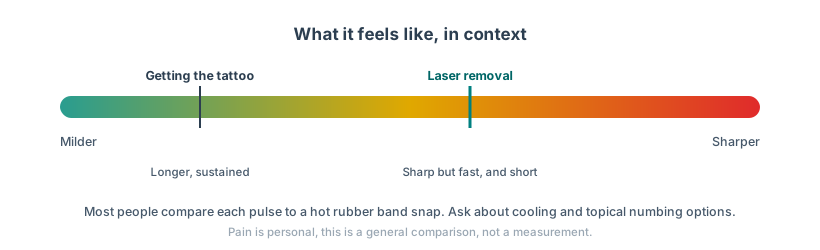
But "uncomfortable" needs context. The classic description, a rubber band snapping against your skin, undersells it. A closer picture: rapid little flicks of heat, like specks of hot oil jumping off a frying pan onto your arm. Each laser pulse lasts a tiny fraction of a second. It's sharp, it's hot, and then it's gone before your brain has fully registered it. Then the next pulse lands.
Here's the part that surprises people: the whole thing is over fast. Because our PicoSure covers ground quickly, a session at Ink Off typically takes 5–15 minutes of actual laser time. Compare that with the hours you spent getting the tattoo. Per second, removal is more intense; per appointment, it's a far smaller ask. For many people, the dread beforehand turns out to be worse than the treatment itself.
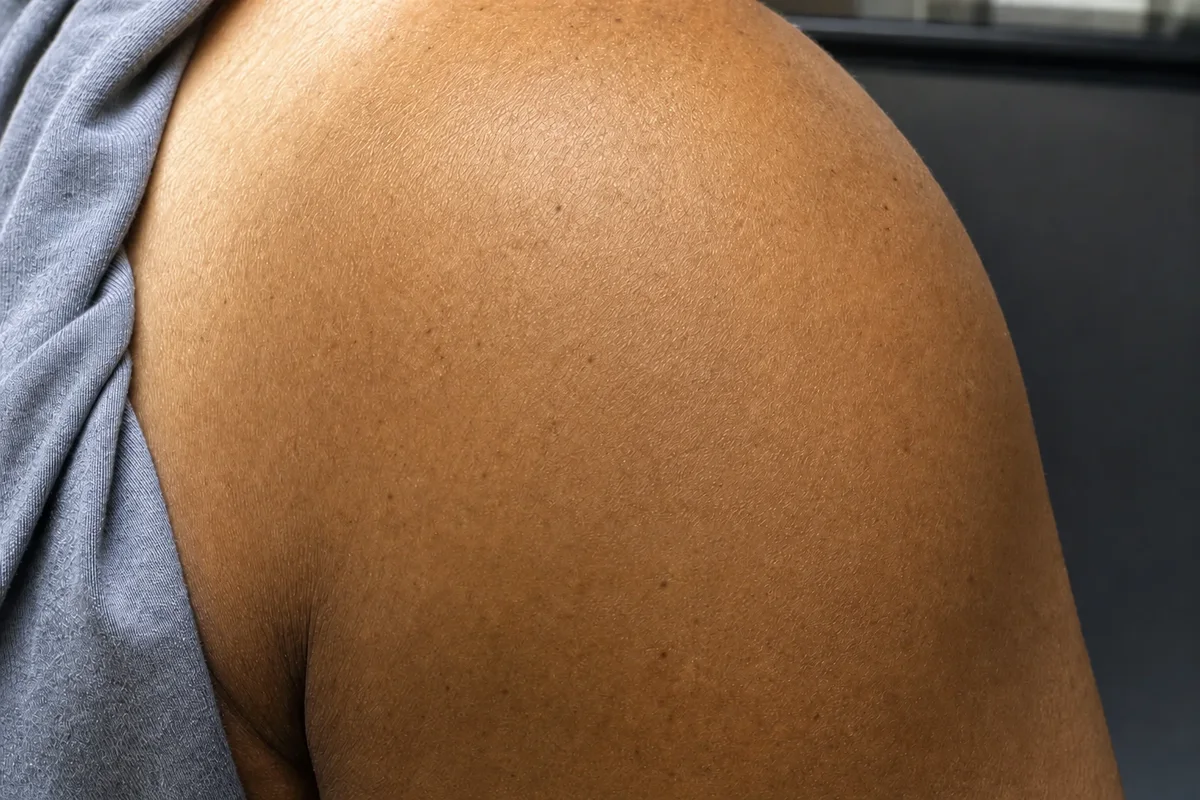
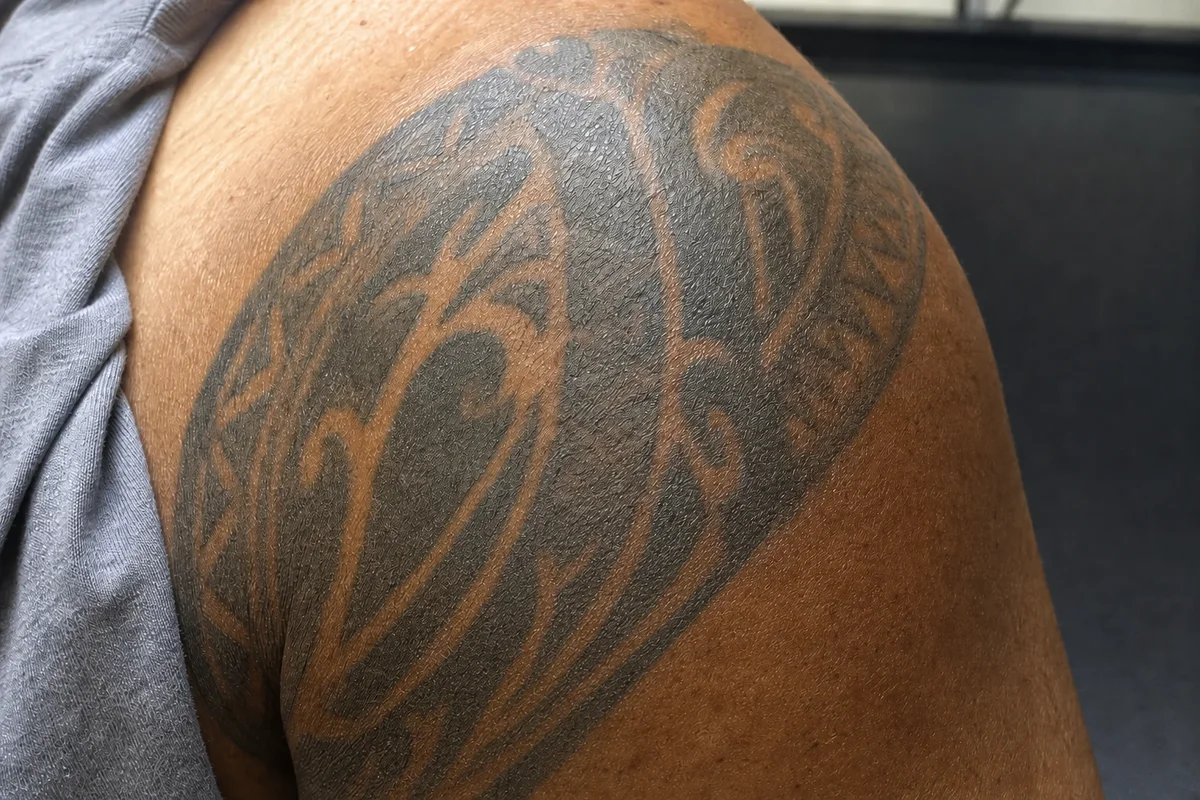
What you're working toward, drag to compare
A dense black shoulder piece, removed completely over a course of short, manageable treatments. Real Ink Off client; identifying details removed to protect privacy. Individual results vary; some inks fade rather than fully clear.
What Changes How Much It Hurts
Two people with the same tattoo can walk out of the same clinic with very different stories. These are the variables that actually move the needle:
- Location on your body. The biggest factor by a distance. Thin skin over bone, and areas dense with nerve endings, feel every pulse. Padded, muscular areas barely complain. More on this below.
- Tattoo size. A small wrist piece might mean two or three minutes under the laser. A half-sleeve is a longer sit, and endurance becomes part of the equation.
- Which session you're on. Early sessions target the most ink, so they tend to be the most intense. As your body clears fragments between visits, later sessions usually involve fewer pulses and less sting.
- Ink colours and density. Dense black ink absorbs laser energy efficiently: good for removal, but it means more sensation per pulse. Sparse or faded ink is gentler going.
- Your skin tone. Deeper skin tones call for more conservative settings to protect the surrounding pigment, which changes how the treatment is paced and how it feels. It's one more reason the person operating the laser matters.
Your Pain Relief Options
You don't have to grit your teeth and cop it. There's a menu of options, and the right combination depends on your tattoo, its location and how you handle discomfort. Raise it at your consultation. A good practitioner will plan for comfort, not dismiss the question.
Topical numbing cream
The most common option. Creams containing lignocaine are applied in a thick layer 30–60 minutes before treatment, usually under cling film so the anaesthetic absorbs properly. Numbing cream won't switch the sensation off (you'll still feel warmth and pressure), but it takes the sharp edge off the sting noticeably. Ask your practitioner which product and strength they recommend and exactly when to apply it.
Skin cooling
Chilling the skin immediately before and during treatment blunts the heat sensation at its source. Clinics do this with chilled-air devices or cold packs applied right up until the laser starts. Cooling pairs well with numbing cream. The two work on different parts of the sensation.
Simple pain relief beforehand
Paracetamol taken 30–60 minutes before your appointment is a common, low-fuss option. What to avoid: aspirin, ibuprofen and other anti-inflammatories in the 24–48 hours before a session. They thin the blood and increase the chance of bruising. Check with your practitioner or your GP before taking anything, especially if you have other health conditions.
Stronger options for big or sensitive pieces
For very large tattoos or unusually sensitive areas, some medically supervised clinics offer injectable local anaesthetic. It's the most complete numbing available, at the cost of the injections themselves. For the typical tattoo treated in a 5–15 minute session, most people find cream plus cooling more than enough.
The underrated one: distraction
Headphones and a good playlist or podcast genuinely help. Ten minutes of laser passes a lot faster when your attention is somewhere else. Bring them. We don't mind.
Where It Hurts Most (and Least)
| Sensitivity | Areas |
|---|---|
| Higher | Ribs and side of the torso, spine, back of neck, ankles, feet, fingers, hands, inner wrist, inner bicep, behind the ear |
| Moderate | Outer forearm, chest, lower back |
| Lower | Outer upper arm, shoulder, thigh, calf, upper back |
If your tattoo sits in the higher-sensitivity zone, don't let that put you off. It just means numbing and cooling earn their keep, and your practitioner can pace the session with breaks. You're in control the whole time: say the word and the laser stops.
The Good News: It Usually Gets Easier
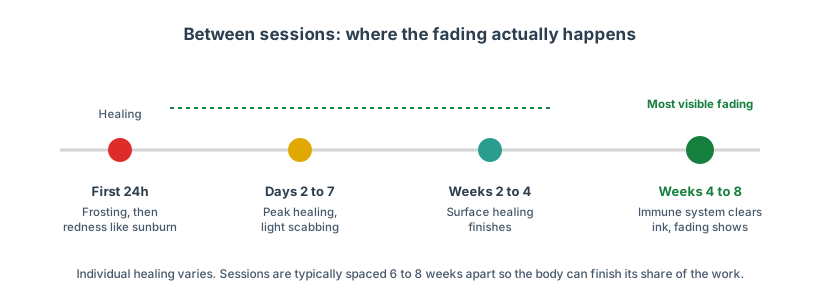
The laser doesn't remove your tattoo directly. It shatters ink into fragments your immune system carries away over the 6–8 weeks between sessions. That has a pleasant side effect: every session, there's less ink left in your skin. Less ink means fewer targets, fewer pulses, and less sensation per pulse, so later sessions typically feel milder than the first.
One honest caveat: stubborn colours, certain greens and blues especially, can need higher energy settings later in a course, which can feel more intense on those patches even though the tattoo overall is fading. Every tattoo responds differently, which is also why session counts are ranges, not promises. Most tattoos need somewhere between 5 and 17 sessions. Our free 2-minute candidacy check gives you a provisional range for yours in about two minutes.
How to Prepare for a Comfortable Session
What you do in the 48 hours before your appointment has a real effect on how it feels. The essentials:
- Hydrate well the day before and the day of your session. Well-hydrated skin handles treatment better.
- Stay out of the sun. Tanned or sunburnt skin is more sensitive and may mean rescheduling.
- Skip alcohol and blood-thinning painkillers for 24–48 hours beforehand (check with your practitioner or GP about your regular medications).
- Eat before you come in. Arriving on an empty stomach makes some people light-headed during treatment.
- Wear loose clothing that gives easy access to the tattoo without wrestling.
- Apply numbing cream on schedule if you're using it. Timing matters more than quantity.
The full pre-session rundown lives on our preparation guide.
What About Afterwards?
Post-session discomfort is milder than most people expect: the treated area feels like a patch of sunburn for one to three days. Some redness, swelling and occasionally a white “frosting” over the ink are normal in the first hours and settle on their own.
Cool compresses, loose clothing over the area and keeping it clean handle almost all of it. Most clients go straight back to work the same day, handy, since we're open Wednesday and Thursday 10am–9pm, Friday 10am–8pm and Saturday 10am–5pm, so you can book around your job rather than take time off. Step-by-step healing instructions are in our aftercare guide.
Worried about pain? Say so at your consultation. The free 20-minute video assessment is no-obligation. Tell your practitioner pain is your main concern and you'll get a comfort plan for your specific tattoo, not a brush-off. You can also read how our PicoSure laser keeps sessions short in the first place.
Frequently Asked Questions
Second for second, most people say yes, but the comparison is misleading. A tattoo takes hours in the chair; a removal session at Ink Off typically takes 5 to 15 minutes. The sensation is sharper but over very quickly, and numbing and cooling options take the edge off.
Usually yes. Topical numbing creams containing lignocaine are applied 30 to 60 minutes before treatment and noticeably dull the sting, though they do not remove sensation completely. Ask your practitioner at your free video assessment which product suits you and how to apply it correctly.
For most people, yes. Each session leaves less ink in your skin, so later treatments involve fewer laser pulses and less sensation per pulse. Every tattoo responds differently, and stubborn colours can occasionally need higher settings later in a course, but the overall trend is easier, not harder.
Areas with thin skin, little padding or lots of nerve endings feel the most intense: ribs, spine, ankles, feet, fingers, inner wrist and behind the ear. Fleshy, muscular areas such as the outer upper arm, thigh and calf are generally the most comfortable.
Paracetamol taken beforehand is a common choice, but avoid aspirin and ibuprofen in the day or two before treatment because they thin the blood and can increase bruising. Always check with your practitioner or your GP first about what is appropriate for you.
Expect a sunburn-like feeling for one to three days, sometimes with redness, swelling or pinpoint frosting that settles within hours. Cool compresses and gentle aftercare manage it well, and most people go straight back to work the same day.
Sources & About This Guide
- Kirby W, Desai A, et al. “The Kirby-Desai Scale: A Proposed Scale to Assess Tattoo-Removal Treatments.” J Clin Aesthet Dermatol, 2009.
- Cynosure PicoSure device documentation, ARTG-included and FDA-cleared picosecond laser platform.
- Ink Off in-clinic treatment experience, Kensington VIC.
- Further reading: Tattoo removal pain management, a neutral explainer on Tattoo Removal Guide (directory operated by Ink Off's founder).
This guide is general information, not medical advice. Ask your practitioner (or your GP) about your specific situation, including before taking any medication ahead of a laser session.
Related Guides
Nervous? Start With a Conversation, Not a Laser
Book a free 20-minute video assessment. Ask every pain question you have, see the PicoSure up close, and leave with a comfort plan and a written quote before you commit to anything.
100% Money-Back Guarantee (conditions) • PicoSure Laser • From $80 a Session