How Many Sessions Does Laser Tattoo Removal Take?
It's the first question everyone asks, and any clinic that answers with a single confident number is guessing. Here's how session estimates really work, the six factors that set your range, and how to get a provisional estimate in two minutes.
Key Takeaways
- Most tattoos need somewhere between 5 and 17 sessions, with a practical minimum of around 4, and every tattoo responds differently.
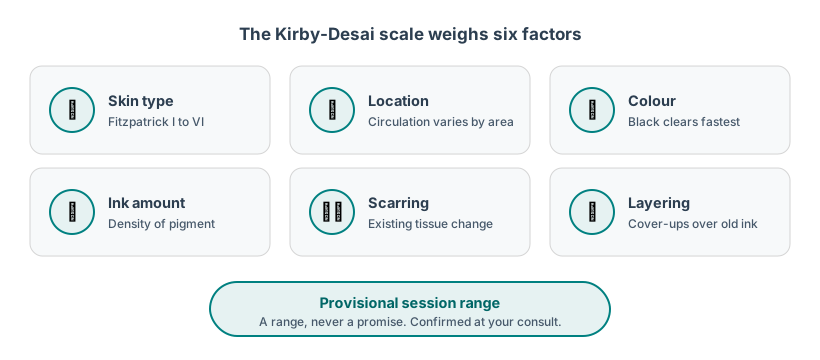
- The Kirby-Desai scale (a validated clinical scale published in 2009) scores six factors to predict your range: skin type, location, colours, ink amount, scarring and layered ink.
- Sessions typically run 5–15 minutes, spaced 6–8 weeks apart. Your immune system does the slow part between visits.
- Fading for a cover-up typically needs only 3–5 sessions, far fewer than complete removal.
- Ink Off's free 1-minute check applies Kirby-Desai factors to give you a provisional range before you set foot in the studio.
The Honest Answer: a Range, Not a Number
Laser removal is gradual by design. Each treatment shatters a layer of ink into fragments small enough for your immune system to collect and carry away. Then you wait several weeks while that clean-up happens, and go again on what's left. No single visit can reach all the ink, no matter how good the laser or the operator.
Across the tattoos we see, most need somewhere between 5 and 17 sessions to fully clear, and even small, faded pieces rarely finish in fewer than about 4. That's a wide range, and it's wide for a reason: every tattoo responds differently. A stick-and-poke initial on a shoulder and a densely packed colour sleeve on a forearm are entirely different removal jobs, even at the same clinic on the same machine.
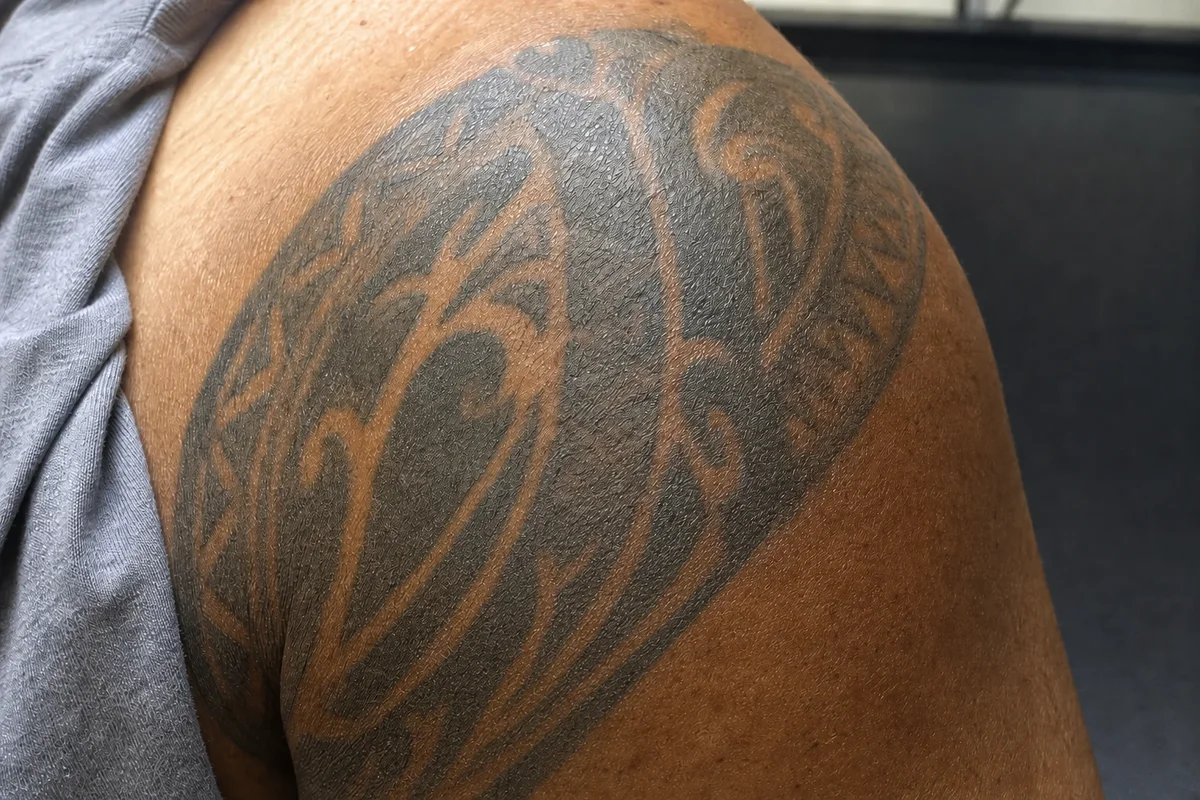
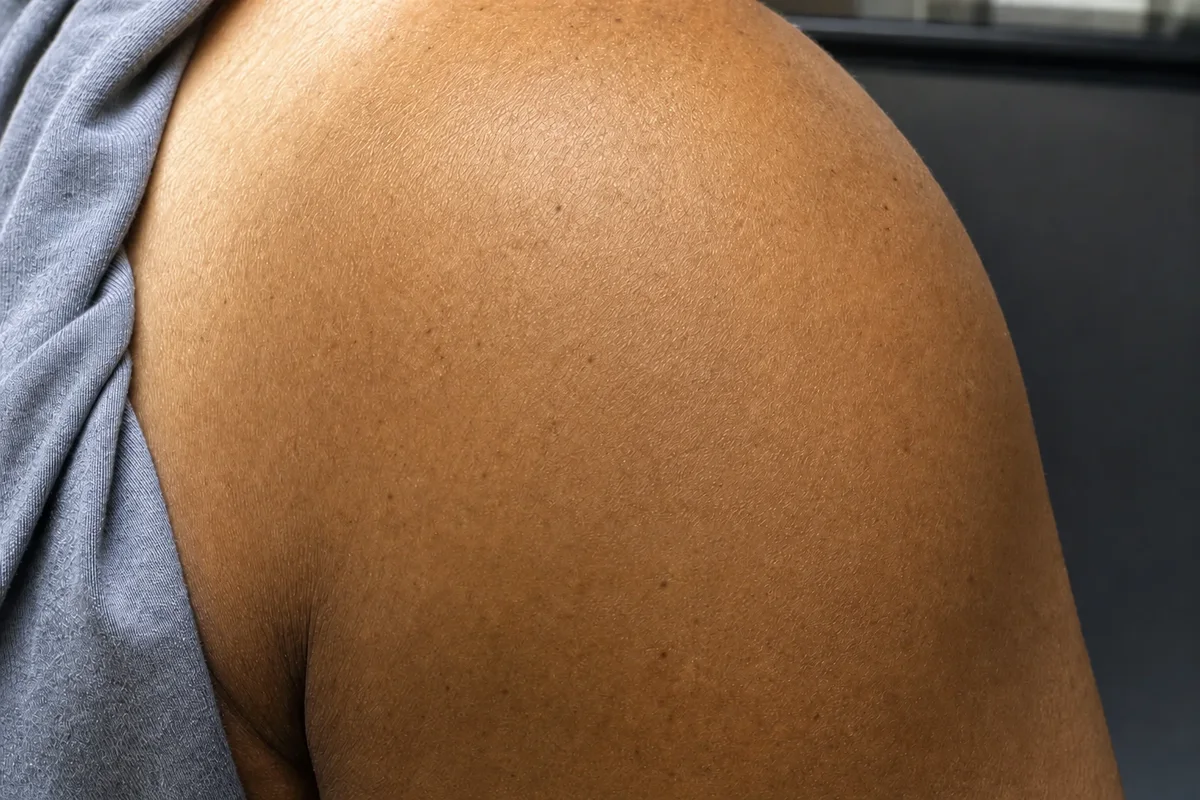
Real client results. Identifying details removed to protect privacy. Individual results vary; some inks fade rather than fully clear. The fading shown is the real recorded result, never fabricated or enhanced.
Red flag: a clinic that quotes you a precise session count sight unseen isn't better informed than everyone else. It's just more comfortable guessing. A credible estimate is always a range, and it always comes after someone has looked at your tattoo.
How Professionals Estimate: the Kirby-Desai Scale
Session estimates aren't folklore. In 2009, dermatology researchers Kirby, Desai and colleagues published a scoring system in the Journal of Clinical and Aesthetic Dermatology that has become the standard clinical tool for predicting removal treatments. It's known as the Kirby-Desai scale.
The scale assigns points across six characteristics of you and your tattoo, and the combined score maps to a predicted number of treatments. It's the same logic our practitioners apply at a consultation, and it's what powers our free 1-minute check: six questions, a couple of minutes, and you get a provisional session range for your tattoo. Provisional is the key word: no scale, and no practitioner, can promise how your skin and immune system will respond. Estimates guide planning; your results set the pace.
The Six Factors That Set Your Range
1. Skin type
Practitioners grade skin using the Fitzpatrick scale, from very fair (type I) through to deeply pigmented (type VI). Darker skin holds more melanin, which competes with tattoo ink for the laser's energy. To protect the skin, treatment runs at more conservative settings, safer, but slower, which usually adds sessions.
2. Location on your body
Removal speed tracks blood supply. Ink on your chest, back or upper arms sits in well-circulated tissue, so shattered fragments get cleared quickly. Hands, feet, ankles and lower legs have leaner circulation, and tattoos there consistently take longer to fade.
3. Ink colours
Black is the co-operative colour. It absorbs laser energy across a broad spectrum and usually clears fastest. Reds and oranges respond well to the right wavelength. Greens, blues and yellows are the stubborn end of the palette and typically stretch a course out. If your tattoo is multicoloured, expect the estimate to sit higher in the range. (Our guide to colour tattoo removal covers this in detail.)
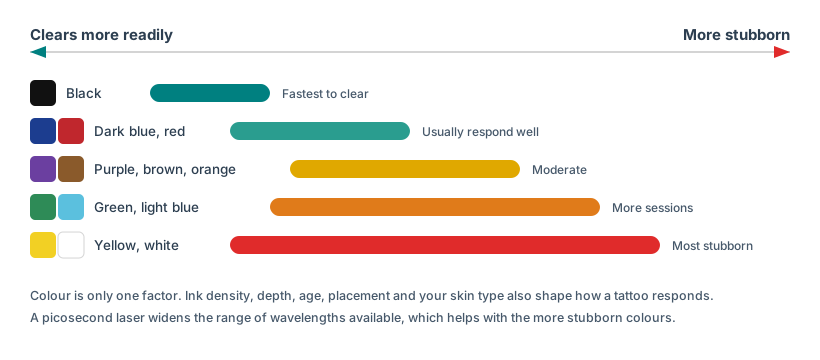
4. Amount of ink
A fine-line script and a solid blackwork panel might cover the same area, but one holds a fraction of the pigment of the other. Heavily saturated, professionally applied ink sits deeper and denser, so there's simply more for the laser to break down across the course. Amateur tattoos, with lighter and shallower ink, usually clear noticeably faster.
5. Pre-existing scarring
If the original tattooing left scar tissue, that tissue traps ink and blunts the laser's reach. Scarring adds points on the Kirby-Desai scale, and sessions to your course.
6. Layered ink (cover-ups)
A tattoo hiding an older tattoo is effectively two removal jobs stacked on top of each other. Layered pieces carry roughly double the pigment and reliably land at the top of the session range.
Why You Wait 6–8 Weeks Between Sessions
The laser appointment is quick; the removal itself happens on your body's schedule. After each session, white blood cells engulf the shattered ink particles and your lymphatic system ferries them away for disposal. That biological freight run takes weeks, which is why sessions are typically spaced 6–8 weeks apart.
Coming back sooner doesn't speed anything up. You'd be paying to fire a laser at ink your body was already in the middle of clearing, while giving your skin less time to recover between treatments. Patience here is not caution for its own sake. It's how the process works.
It also means your general health quietly matters. Hydration, sleep, exercise and not smoking all support the immune and lymphatic activity doing the real work between visits. Our aftercare guide covers what to do (and avoid) after each session to keep things moving.
What a Session Looks Like at Ink Off
The part people build up in their heads is over fast. Sessions typically run 5–15 minutes depending on the tattoo's size. A small piece is often done in about five. You'll spend more of the appointment on skin checks, eye protection and aftercare instructions than under the laser itself.
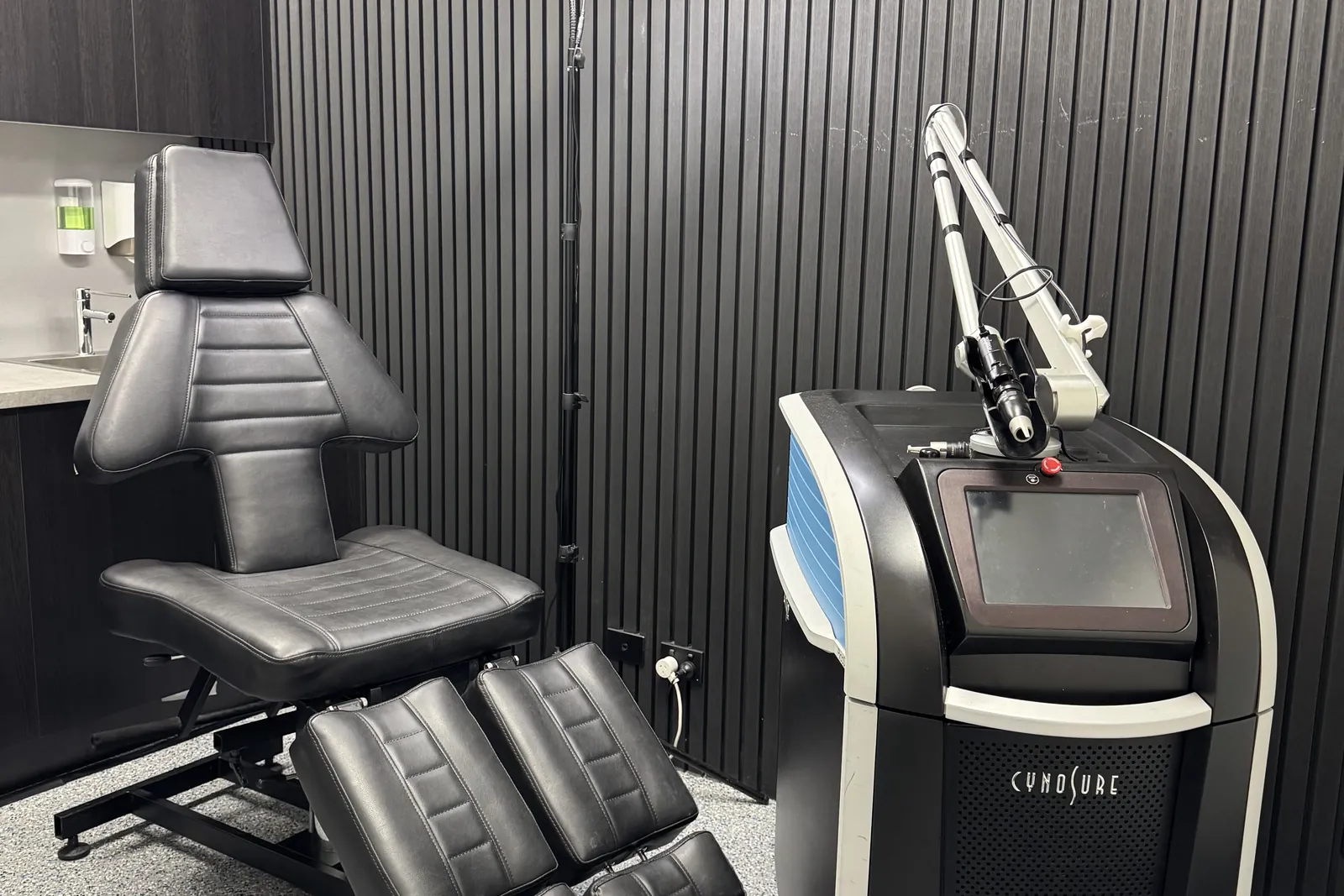
We treat on a Cynosure PicoSure picosecond laser (ARTG-included and FDA-cleared), on premises in our Kensington studio. Where older Q-switch machines rely mostly on heat to break ink apart, PicoSure's ultra-short pulses work photomechanically, a pressure-wave effect that shatters pigment into finer fragments, and it often needs fewer sessions than older Q-switch lasers. The other five factors above still set your range, though; the machine helps, it doesn't rewrite biology. More on the technology on our PicoSure page.
Fading for a Cover-Up: the Short Course
Not everyone needs their ink gone entirely. If your plan is new art over the old, you only need the existing tattoo lightened enough for an artist to design over it, and that typically takes around 3–5 sessions rather than a full removal course.
This is one place Ink Off is genuinely unusual: our sister business, Mother Goose Tattoo Studio, works out of the same Stubbs Street studio and handles cover-up work. Your practitioner and your tattoo artist can look at the same piece and agree on how light it needs to go, so you don't pay for fading sessions the cover-up never needed.
What Your Session Count Means for Your Budget
At most clinics, every extra session is an extra invoice, so an estimate that drifts from 8 sessions to 12 quietly grows your bill by half. That's exactly why Ink Off prices per session, from $80 (extra small) to $300 (extra large, up to A4), with no contract, no credit check and no lock-in: you only ever pay for sessions you actually have, and your written quote is locked for 24 months so the price you were told doesn't move under you.
As an example only, not a quote: a small tattoo at $150 a session across an 8–12-session range runs somewhere around $1,200–$1,800 all-up. The pricing calculator lets you run the numbers against your own tattoo's likely session range, and full removal is backed by our 100% money-back guarantee (conditions apply).
Getting a Real Estimate for Your Tattoo
Reading about averages only gets you so far. The useful number is the range for your tattoo. Two ways to get it:
- Online, right now: the free 1-minute check asks six Kirby-Desai-based questions and returns a provisional session range in about two minutes.
- In person: a free 20-minute video assessment with a written plan, no obligation, and you'll leave knowing your range, your price and whether removal or fading is the smarter goal.
Either way, treat the number as a planning range, not a finish line. Your skin will tell us the real answer, one session at a time.
Frequently Asked Questions
No. Each laser pass only shatters part of the ink, and your immune system needs weeks to carry those fragments away before the next treatment can reach what remains. Even small, faded tattoos generally need a minimum of around 4 sessions, and most tattoos need somewhere between 5 and 17. Anyone promising complete removal in one visit is overpromising.
The laser does its work in minutes, but your immune system does the actual removal over the following weeks, transporting shattered ink fragments away through the lymphatic system. Treating again before that clean-up finishes wastes a session on ink your body was already clearing and gives your skin less time to recover. That is why sessions are typically spaced 6 to 8 weeks apart.
Sessions at Ink Off typically run 5 to 15 minutes depending on the size of the tattoo. Small pieces are often done in about 5 minutes. The appointment itself is a little longer to allow for skin checks, eye protection and aftercare instructions, but the laser time is short.
Fading for a cover-up typically needs around 3 to 5 sessions, well short of a full removal course. You only need to lighten the existing ink enough for a tattoo artist to design over it. Ink Off shares its Kensington studio with Mother Goose Tattoo Studio, so fading and cover-up can be planned together under one roof.
Often, but not always. PicoSure delivers energy in picosecond pulses that break ink apart photomechanically, with pressure rather than mainly heat, and it often needs fewer sessions than older Q-switch lasers. Your tattoo's size, colours, ink depth, age, position and your skin type still set the range, and every tattoo responds differently, so treat any estimate as a provisional range rather than a promise.
Sources & About This Guide
- Kirby W, Desai A, Desai T, Kartono F, Patel G. "The Kirby-Desai Scale: A Proposed Scale to Assess Tattoo-Removal Treatments." Journal of Clinical and Aesthetic Dermatology, 2009;2(3):32–37.
- Session length, spacing and treatment approach reflect Ink Off's clinical practice on the Cynosure PicoSure picosecond laser (ARTG-included and FDA-cleared), Kensington VIC, as at July 2026.
- Further reading: How many sessions tattoo removal takes, a neutral explainer on Tattoo Removal Guide (directory operated by Ink Off's founder).
This guide is general information, not medical advice. Ask your practitioner (or your GP) about your specific situation.
Related Guides
How Many Sessions Would Your Tattoo Need?
Six questions, two minutes, and you'll have a provisional session range based on the same Kirby-Desai factors practitioners use.
100% Money-Back Guarantee (conditions) • PicoSure Laser • From $80 a Session