Cover-Up vs Tattoo Removal: Which Path Is Right for You?
"I want this tattoo gone" can mean three very different things: cover it, remove it completely, or fade it just enough for new ink to go over the top. Each path has a different timeline, cost and end result. Here's how to pick yours.
Key Takeaways
- You have three real options: a direct cover-up, full laser removal, or the hybrid: fade first, then cover.
- Fading for a cover-up typically takes around 3–5 sessions; full removal usually lands somewhere between 5 and 17. Every tattoo responds differently.
- Dense black ink boxes your artist in: the cover-up has to be bigger and darker. A lighter canvas opens up the full colour palette.
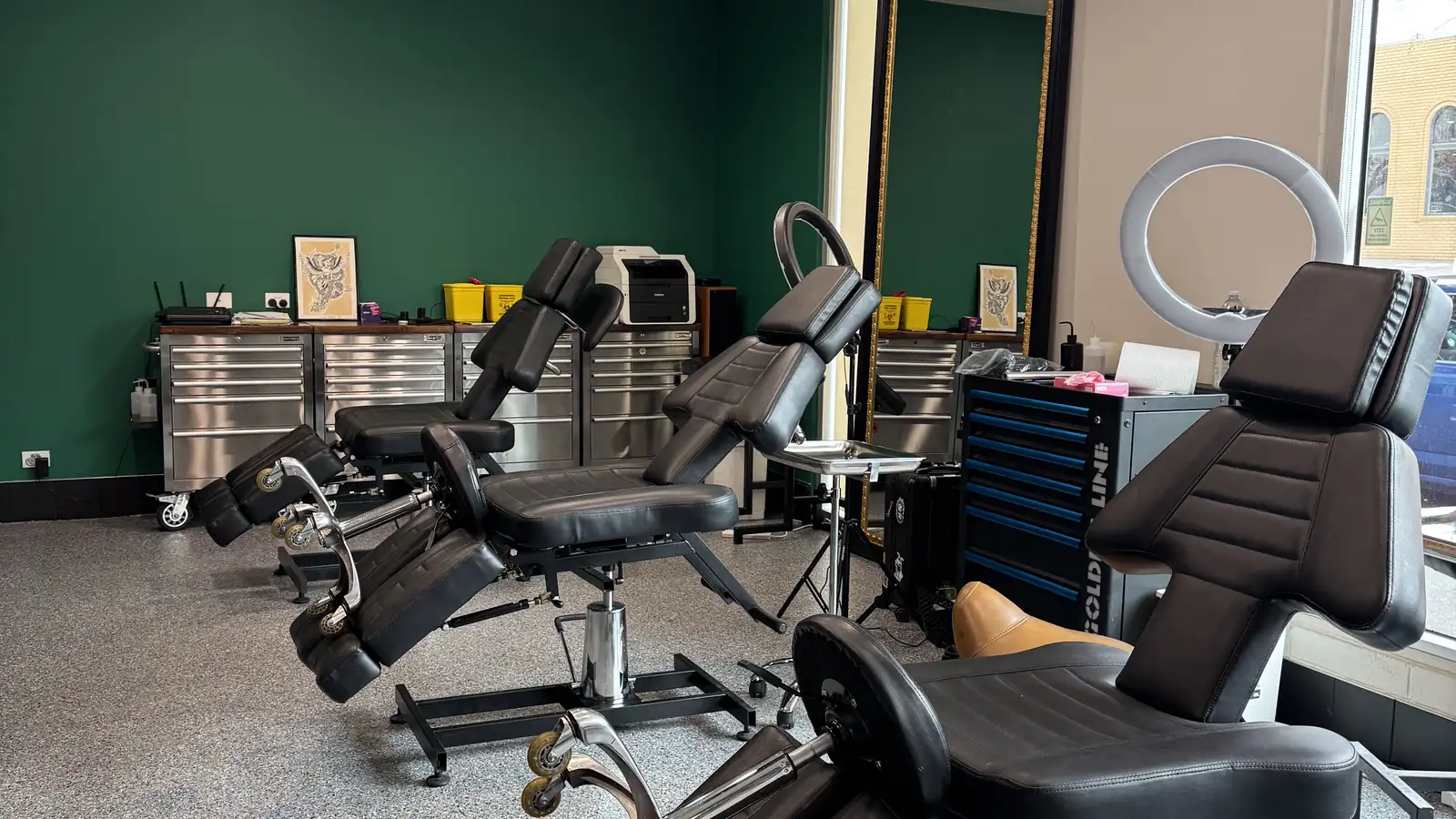
- Ink Off shares its Kensington studio with Mother Goose Tattoo Studio, so the laser work and the cover-up can be planned under one roof.
- Laser treatment starts from $80 a session, no contract, no credit check, no lock-in, and it begins with a free video assessment, not a commitment.
Three Ways to Deal With a Tattoo You've Outgrown
Most people arrive at this decision thinking it's binary: keep it or laser it. There's a third path that often beats both: lightening the old tattoo with a short course of laser, then letting an artist build something new over the faded base. Which one is right for you depends on three questions: Do you want new ink at all? How dark and dense is the existing tattoo? And how patient are you prepared to be?
Let's take the options one at a time.
Option 1: Direct Cover-Up, No Laser at All
A talented cover-up artist designs new work that absorbs or conceals the old tattoo. When the original piece is small, light, or has already faded on its own, this can work brilliantly, and it's the fastest route to new ink by far.
The physics, though, are unforgiving. Tattoo ink doesn't erase what's underneath it; it layers over it. That creates hard limits:
- Dark ink demands darker ink. An artist can't put light colours over solid black. The black wins. Heavy old work restricts the palette to deep tones.
- Cover-ups grow. Concealing a design usually means going noticeably larger than the original, often two to three times the size.
- A failed cover-up doubles your problem. If it doesn't land, you now have two tattoos occupying the same skin, and future removal gets harder.
If your artist looks at your tattoo and says they can cover it confidently as-is, great. If they hesitate, listen to that hesitation. It's usually the ink density talking.
Option 2: Fade First, Then Cover, The Path Most People Don't Know About
This is the hybrid: laser treatment lightens the existing tattoo (without taking it all the way to bare skin) and then your artist works over the faded base. It's often the smartest route for medium-to-large pieces with heavy black work or saturated colour.
Why artists love a faded canvas:
- The full colour range comes back into play, instead of only dark tones.
- The new design can stay close to the size you actually want, rather than ballooning to hide the old one.
- Fine detail and lighter shading become possible where solid black used to sit.
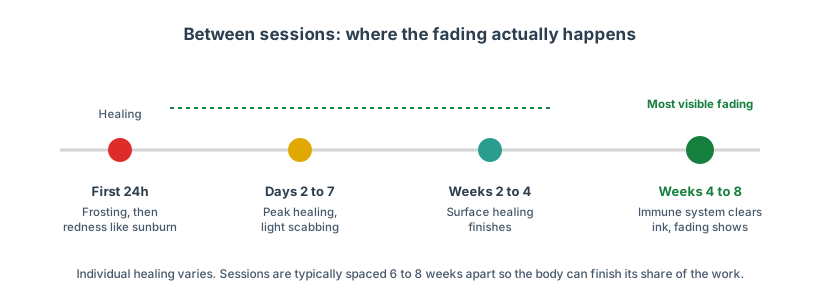
Because the target is "light enough to work over" rather than "gone", fading typically needs around 3–5 sessions, noticeably fewer than full removal. With sessions typically spaced 6–8 weeks apart, that's roughly 4–10 months from first zap to cover-up chair. Add at least 4–6 weeks after the final laser session for the skin to fully settle before it's tattooed again.
One practical warning: fading works best when the laser practitioner and the tattoo artist agree on the target. Which areas need the most lightening? Are certain colours in the old piece a problem for the new design? Getting both professionals talking early saves sessions, and money. Melbourne clinics that actively work with cover-up artists are rarer than you'd expect; on the Tattoo Removal Guide directory, only around one in eight Melbourne clinics lists fading-for-cover-up as a named service.
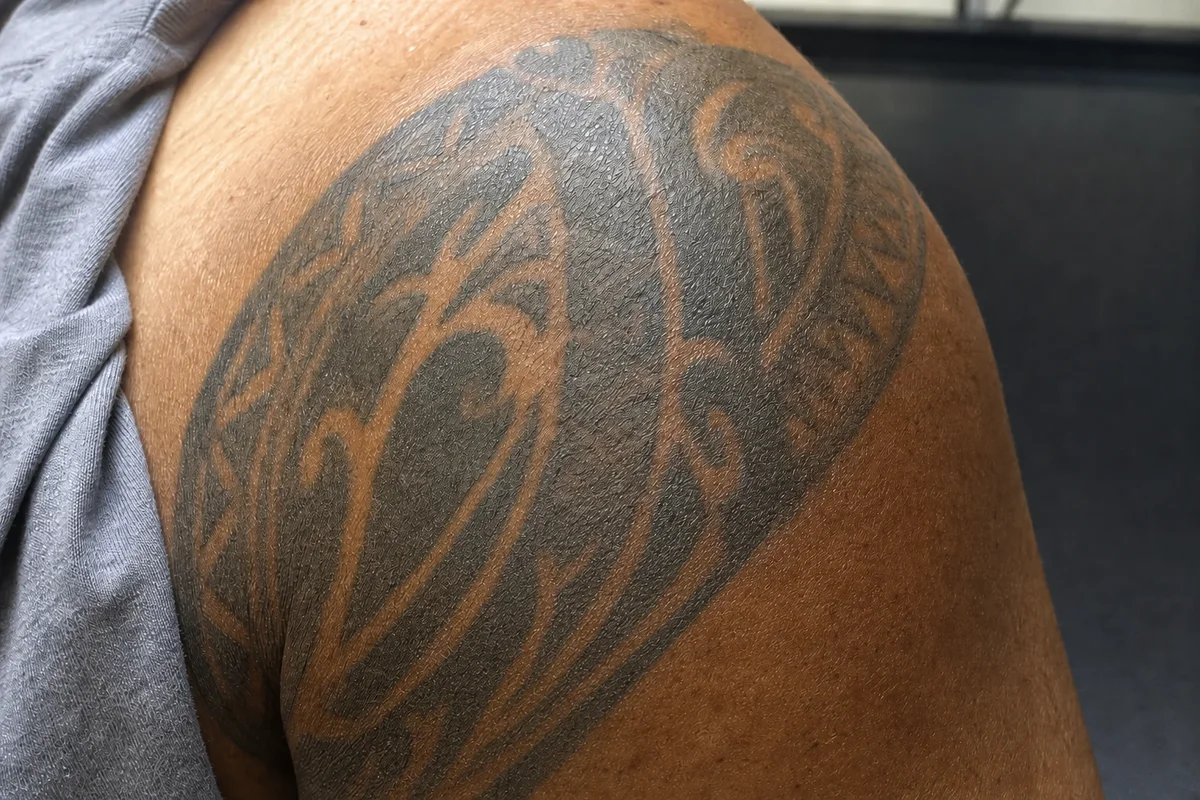
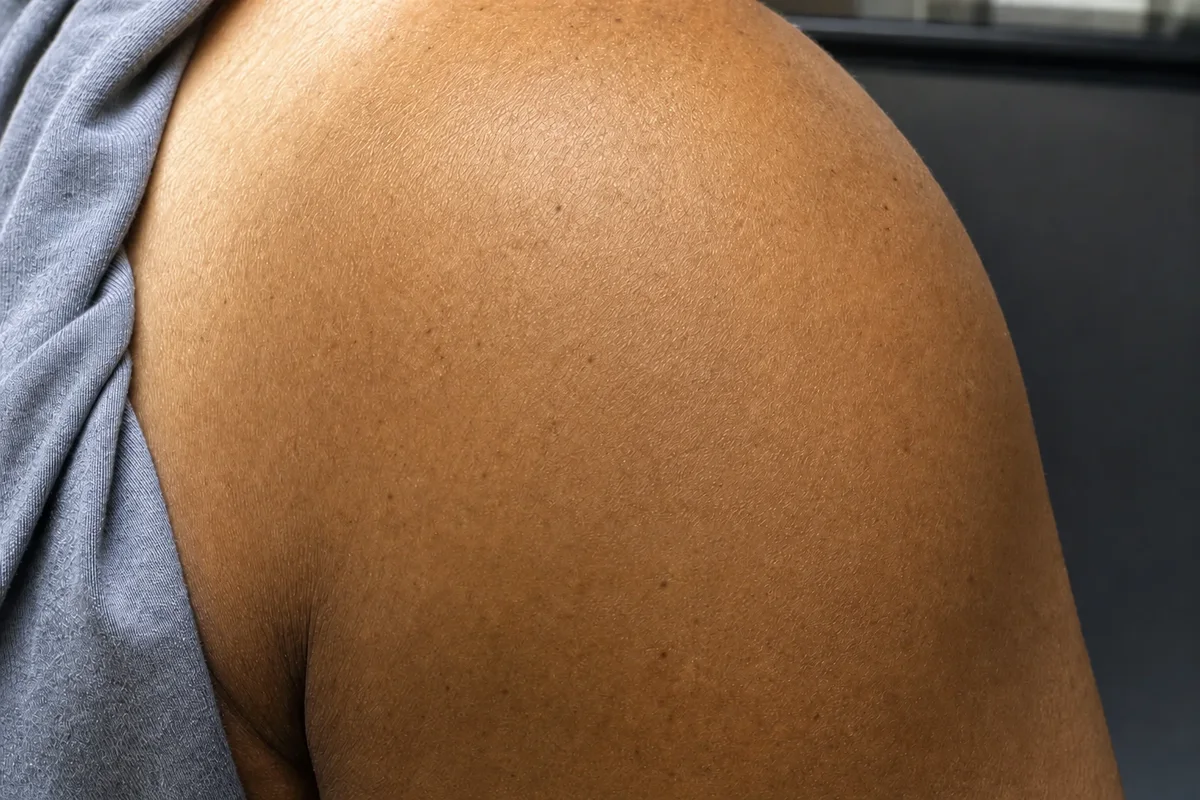
Real client results. Identifying details removed to protect privacy. Individual results vary; some inks fade rather than fully clear. The fading shown is the real recorded result, never fabricated or enhanced.
Option 3: Full Removal, The Clean Slate
Sometimes you don't want new ink. You want the skin back. Full laser removal breaks the ink down over repeated sessions until the tattoo is gone or close to invisible, the right call when no cover-up design would satisfy you, when the tattoo sits somewhere highly visible, or when you're simply done with being tattooed there.
Set honest expectations on timeline: most tattoos need somewhere between 5 and 17 sessions (rarely fewer than about 4), spaced typically 6–8 weeks apart, so a complete removal usually spans a year or more. Every tattoo responds differently, which is why credible clinics quote ranges based on factors like ink colour, density, age, body placement and skin type. Our free 2-minute candidacy check uses the Kirby-Desai clinical scale to give you a provisional range for your specific tattoo, and our guide to how many sessions removal takes unpacks each factor.
Side by Side: Sessions, Timelines, Outcomes
| Path | Laser sessions | Rough timeline | End result |
|---|---|---|---|
| Direct cover-up | None | As soon as your artist can book you | New tattoo, larger and darker than the original design allows |
| Fade, then cover | Typically 3–5 | Roughly 4–10 months, plus 4–6 weeks healing before the new ink | New tattoo with full design and colour freedom |
| Full removal | Usually 5–17 | Often 12–24 months | Clear or near-clear skin, no replacement |
The 6–8 week gap between sessions isn't padding. It's the time your immune system needs to flush out the shattered ink particles. Booking sessions closer together doesn't speed anything up; it just stresses skin that hasn't finished healing.
What Fading Costs at Ink Off
Fewer sessions means fading is usually the cheaper laser path, and our pricing keeps it predictable either way. Ink Off prices per session, no contract, no credit check, no lock-in: from $80 (extra small, up to 2×2cm) up to $300 (extra large, up to A4). Pieces larger than A4 are treated in sections, quoted at consult.
As an example only, not a quote: fading a medium (palm-sized) piece at $200 a session for a typical 3–5-session course runs somewhere around $600–$1,000 all-up, well below the 5–17-session range a full removal of the same tattoo would usually need. Run your own numbers in our pricing calculator. Removal plans are backed by our 100% money-back guarantee (conditions apply). Budget separately for the new tattoo itself. That's between you and your artist.
Both Options Under One Roof in Kensington
Here's the part that genuinely sets our setup apart, and it's not a laser spec. Ink Off shares its premises at 35 Stubbs St, Kensington with Mother Goose Tattoo Studio, a working tattoo studio that does cover-up work. Same building, same front door.
For the fade-then-cover path, that solves the coordination problem outright:
- The cover-up artist and the laser practitioner can look at your actual tattoo together and agree how much fading the new design needs, no cross-town phone tag, no photos that flatten the detail.
- Progress gets checked between sessions. If the artist says the canvas is ready after three sessions instead of five, you stop, and stop paying.
- You're never stuck refereeing between two businesses with different opinions.
And if you walk in wanting a cover-up but the honest answer is that removal suits you better (or the reverse), you'll hear it, because we offer both and have no reason to push one. You can see how faded and removed tattoos actually progress in our results gallery.
What Affects How Fast a Tattoo Fades
No two tattoos fade at the same rate. The main levers:
- Ink colour. Black responds best to laser. Blues and greens are more demanding; reds, yellows and whites can be the most stubborn. Our colour removal guide goes deeper.
- Ink density. Bold traditional work with solid fills takes more sessions than fine-line pieces.
- Age. Older tattoos have usually faded a little already and tend to respond faster.
- Placement. Areas with strong circulation (torso, upper arms, thighs) clear ink faster than ankles, fingers and feet.
- Skin type. Settings are adjusted to your skin tone; the plan changes, not the possibility.
On technology: we run a Cynosure PicoSure picosecond laser on premises, which works photomechanically (pressure waves shatter ink rather than relying on heat) and often needs fewer sessions than older Q-switch lasers. The full rundown lives on our technology page.
Frequently Asked Questions
Not always. A small, light or already-faded tattoo can sometimes be covered directly by a skilled artist. Large or dark tattoos are a different story: heavy black ink forces the new design to be bigger and darker than most people want. In those cases a short course of laser fading first gives your artist a workable canvas and far more design freedom.
Fading typically takes around 3 to 5 sessions, spaced 6 to 8 weeks apart, which usually means roughly 4 to 10 months from first session to cover-up appointment. That is noticeably fewer sessions than full removal, because the goal is a lighter canvas, not bare skin. Every tattoo responds differently, so treat any estimate as a range.
Plan on waiting at least 4 to 6 weeks after your final fading session before the cover-up goes on. Your skin needs to finish healing and settle completely before it is tattooed again. Your artist and your laser practitioner should both sign off that the area is ready.
Usually, yes, simply because fading needs fewer sessions. Ink Off prices per session, from $80 (extra small) up to $300 (extra large, up to A4), no contract, no credit check, no lock-in. Fewer sessions means a smaller total. Remember to budget separately for the new tattoo itself.
At our studio, yes. Ink Off handles the laser fading, and Mother Goose Tattoo Studio, which shares the same premises at 35 Stubbs St, Kensington, does cover-up work. That means the artist and the laser practitioner can look at the same tattoo in person and agree on exactly how much fading the new design needs.
Sources & About This Guide
- Kirby W, Desai A, et al., "The Kirby-Desai Scale: A Proposed Scale to Assess Tattoo-Removal Treatments", Journal of Clinical and Aesthetic Dermatology, 2009 (session-estimate factors)
- Tattoo Removal Guide, Australian clinic directory data on fading-for-cover-up availability in Melbourne
- Further reading: Cover-up vs full removal, a neutral explainer on Tattoo Removal Guide (directory operated by Ink Off's founder).
Tattoo Removal Guide is an independent clinic directory operated by Ink Off's founder. This guide is general information, not medical advice. Ask your practitioner (or your GP) about your specific situation.
Related Guides
Not Sure Which Path Fits Your Tattoo?
Get a provisional session-range estimate online in two minutes, or book a free 20-minute video assessment. We'll give you a straight answer on cover-up, fading or removal, because we offer all three.
100% Money-Back Guarantee (conditions) • PicoSure Laser • From $80 a Session